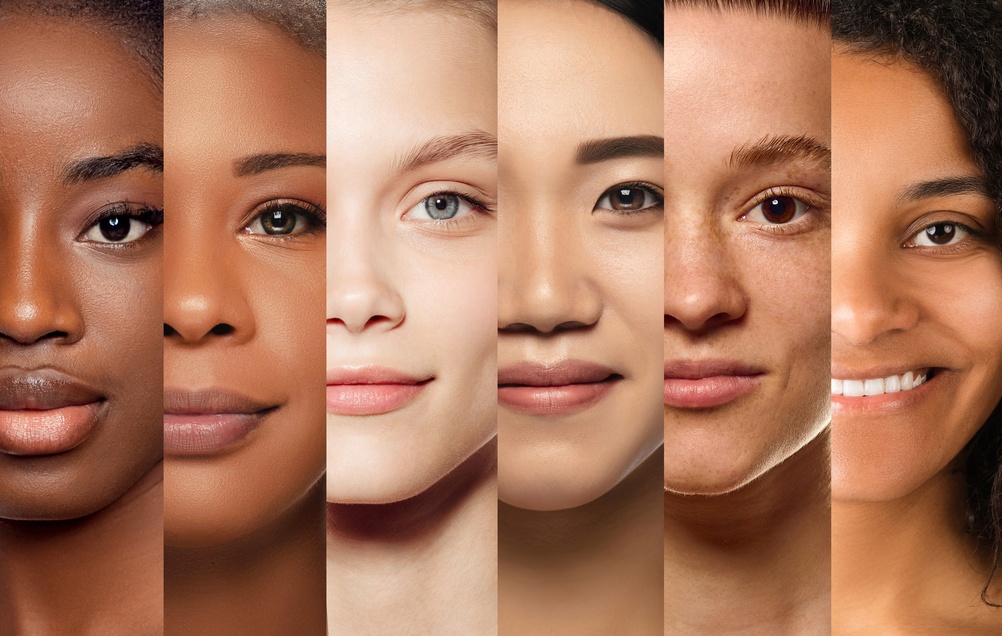
Your skin’s pigment shapes every laser treatment you get, from the wavelength a dermatologist chooses to how many sessions you need.
A mismatched setting can turn a treatment meant to fade sun spots into a source of new dark marks.
Dermatologists gauge that pigment with the Fitzpatrick scale, a six-level system that sorts skin by how it reacts to the sun.
A basic grasp of how Fitzpatrick skin types and laser treatments connect lets you walk into a consultation with sharper questions.
A Scale Built to Measure Sun Sensitivity
Thomas Fitzpatrick created the scale in 1975 to set safe light doses for people receiving UV treatment for psoriasis.
The scale also weighs hair and eye color alongside how readily skin burns or tans.
Today, dermatologists also use it to guide laser treatment choices and settings.
The 6 Fitzpatrick Skin Types at a Glance
Each step up the scale brings more pigment and a lower tendency to burn:
- Type I, fair skin that always burns and never tans
- Type II, fair skin that burns easily and rarely tans
- Type III, light olive skin that burns first, then tans
- Type IV, medium-brown skin that tans easily and seldom burns
- Type V, dark brown skin that rarely burns
- Type VI, very dark brown to black skin that never burns
Many people fall between two types. The scale relies on how you describe your own burning and tanning, so a dermatologist’s exam helps confirm where you land.
Why Melanin Changes How a Laser Behaves
Lasers that treat sun spots or remove hair work by targeting melanin.
Melanin in the surrounding skin absorbs that energy too. Darker skin holds more melanin near the surface, so it takes in more of the laser’s energy there.
Extra absorption raises the risk of burns and injury to the outer layer of skin.
Types IV through VI face a higher chance of skin darkening or lightening after treatment, along with keloid scarring.
How Dermatologists Adjust Lasers for Darker Skin
Darker skin can still be treated with lasers, and a few adjustments help reduce the chance of burns or pigment changes.
Longer-wavelength lasers reach deeper with less damage to the surface. They are a common choice for types IV through VI.
Lower energy settings and longer pulses lower the risk further, though they often require more sessions.
Contact cooling or a cold spray before or after treatment helps shield the outer layer.
For resurfacing, a lightening cream such as hydroquinone may be used before and after treatment to reduce the risk of dark spots. Hydroquinone is also part of some sun damage treatment plans.
Why Your Skin Type Determines Which Treatments Are Safe
Laser care at the Arlington and Vienna, VA, offices falls into several categories, each aimed at a different target:
- Pigmentary lasers for sun spots, melasma, and discoloration
- Vascular lasers for broken blood vessels and rosacea
- Resurfacing lasers for the face, neck, and chest
- Laser hair removal for the face and body
Intense pulsed light can raise the risk of dark spots on darker skin, and aggressive resurfacing carries a similar concern.
For lighter skin with sun spots, redness, or blotchiness, BBL light therapy is one option to discuss.
A Laser Plan Built Around Your Skin History
Any trained operator can switch on a laser. The wavelength, energy, and pulse length for your skin call for a dermatologist’s judgment.
Dr. Marjan Yousefi’s practice combines medical care with cosmetic dermatology, so a laser plan starts with a full look at your skin’s health.
Mention any history of cold sores, because some laser treatments can trigger an outbreak. Dark marks that linger after cuts or acne, along with raised scars, help a dermatologist judge how your skin heals.
Each consultation weighs Fitzpatrick skin types and laser treatments together before any plan is set.
Your Skin Type Sets the Starting Point
Your skin’s pigment belongs at the center of every laser decision.
Before the first pulse of light, board-certified dermatologist Dr. Marjan Yousefi can pinpoint your skin type and match a treatment to it.
Call 703-255-5070 to talk through Fitzpatrick skin types and laser treatments, or send a message online.
Online self-scheduling makes it easy to book your consultation.