
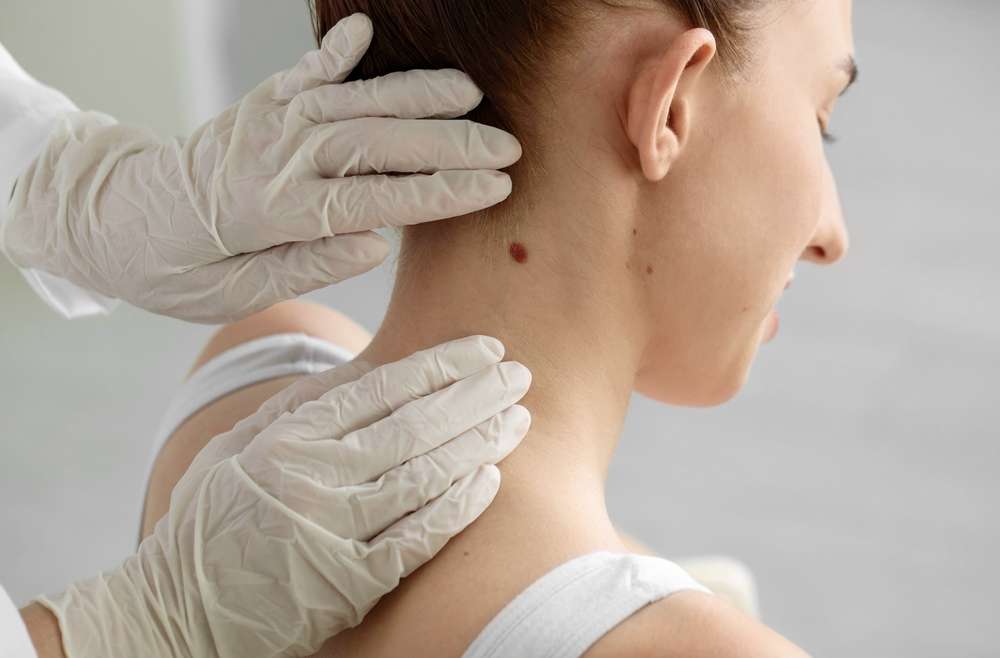
Most moles don’t ever do much of anything or become a cause of concern. However, if you notice changes in a mole, you may start to worry.
Changes in a skin lesion are often an early signal about potential skin cancer development, so recognizing them quickly is vital.
Here’s What It May Mean When Your See Changes in a Mole
Biologically, changes in a mole can signal that the melanocytes within it have begun behaving outside their “normal.”
This can stem from benign causes like a hormonal fluctuation or sun exposure, or it can indicate the early stages of melanoma.
These Specific Changes Should Send You to a Dermatologist Without Delay
Not every mole change looks dramatic, and the subtle ones are the most likely to be dismissed until they’ve had too much time to develop.
Changes you need to take action on as soon as possible include:
- A mole that has grown noticeably larger over a short period
- A previously uniform color developing new shades of brown, black, red, or white
- Borders that were once smooth becoming irregular
- Asymmetry developing in a mole that once was symmetrical
- New symptoms appearing that weren’t there before, such as itching or crusting
- A mole becoming raised or developing a texture different from what it used to have
Any single item on this list justifies a same-day call rather than continued monitoring, but making the call is especially important if multiple apply.
Changes in a Mole Require More Than What a Self-Check Can Assess
The ABCDE self-check method — evaluating asymmetry, border, color, diameter, and evolution — is a very valuable home screening tool.
It works with what you can see.
A changing mole, however, has structural details beneath its surface that require dermoscopy to properly evaluate, which is why seeing a dermatologist is crucial.
Your dermatology specialist uses this specialized instrument to examine the patterns under the skin that allow them to make a clinical diagnosis with a much greater level of accuracy.
Your Individual Risk Factors Play a Role in How Urgently a Concerning Change Needs Attention
There are certain situations that make getting a professional evaluation of mole changes particularly critical for your health.
Higher risk factors include fair skin that burns more easily than it tans, light-colored hair and / or skin, and a history of tanning bed use.
Additionally, multiple lesions or atypical moles, having a personal or family history of skin cancer, significant accumulated sun exposure, frequent childhood sunburns, and a compromised immune system.
If multiple risk factors apply to you, you should have any mole change evaluated right away and also be sure to get annual skin cancer screenings.
Prevention Habits Can Help You Reduce Your Risk of Developing Concerning Mole Changes
A broad-spectrum sunscreen with an SPF of 30 or higher should be applied before you go outdoors and reapplied throughout the day.
This applies even on cloudy days or in the wintertime.
Wear protective gear such as hats and long sleeves, and try to stay in shaded outdoor areas whenever possible from 10 am to 4 pm.
Be sure that you also book annual full-body professional skin exams so your dermatologist can recognize changes to your skin health quickly.
Don’t Wait on a Mole That’s Changing When It’s So Easy to Book at Dr. Marjan Yousefi’s Office for an In-Depth Evaluation Today
A mole that’s evolving deserves professional attention ASAP, and you can receive the compassionate care you need right here.
Dr. Marjan Yousefi and our team evaluate changing moles with clinical precision for your health and safety.
Contact us by calling 703-255-5070 today to speak with a member of our team or book your appointment online and get on the path to healthy, cancer-free skin