
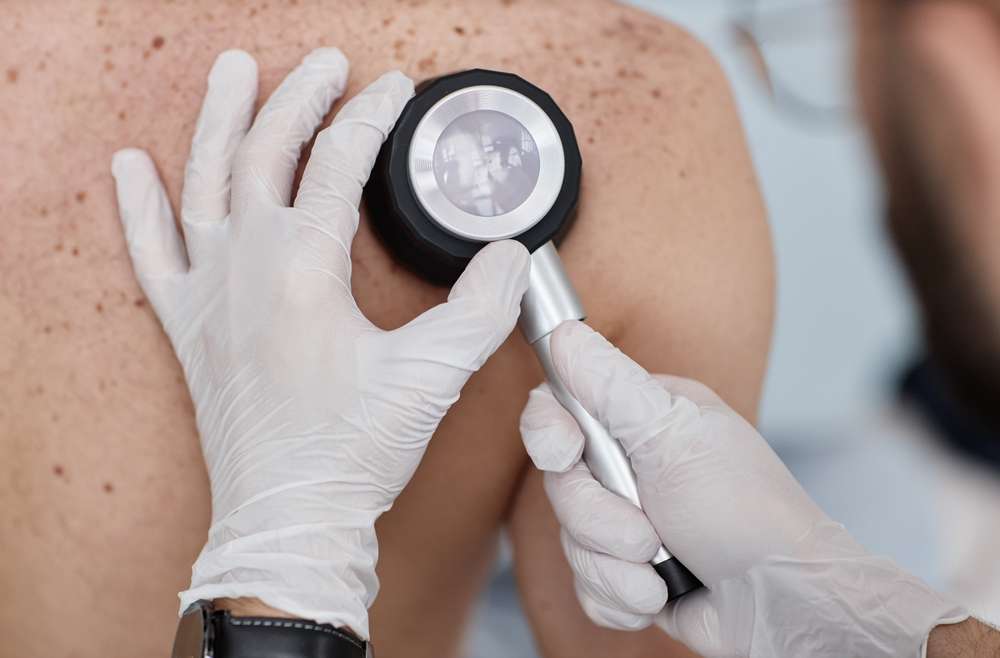
Melanoma often looks like just another mole, which makes it the hardest skin cancer to identify.
A few key differences from more common types can help you recognize which spots to watch.
Basal cell and squamous cell carcinomas account for most skin cancers, while melanoma makes up a far smaller share.
A side-by-side look at common skin cancers in Vienna, VA, can help you decide when a spot needs a dermatologist’s attention.
Where Different Skin Cancers Begin
Skin cancer forms when cells grow abnormally, often after years of UV exposure from the sun or tanning devices.
Each type takes its name from the cells where it starts.
Basal cell carcinoma begins in basal cells, and squamous cell carcinoma grows in the middle and outer layers of the skin. Melanoma starts in melanocytes, the cells that give skin its color.
The cell of origin shapes how each cancer looks, where it appears, and how it behaves.
How the Two Most Common Skin Cancers Look
Basal cell carcinoma makes up about eight in 10 skin cancer cases.
It often looks like a shiny or waxy bump, sometimes translucent, that may bleed or scab.
It can also form a scaly patch with raised edges, most often on the face and neck.
Squamous cell carcinoma may appear as a skin-colored nodule, a flat and scaly sore, or a rough patch on the lip. On darker skin, it often forms in less visible areas.
Both tend to grow on sun-exposed skin, which makes regular skin cancer checks a practical habit.
What Makes Melanoma Different
Melanoma can spread to other parts of the body more quickly than the other two types.
Dermatologists check moles for warning signs with the ABCDE guide:
- Asymmetry, with mismatched halves
- Border, with ragged or notched edges
- Color, with several shades of brown, black, or tan
- Diameter, wider than a pencil eraser
- Evolution, with any change in size, shape, or color
Melanoma does not always follow this pattern, so any new or changing spot is worth checking.
It can also appear in areas that get little sun. On darker skin, it more often develops on the palms, soles, or under the nails.
In men it often forms on the trunk or upper back, and in women on the legs.
4 Types of Melanoma to Know
Melanoma itself comes in several types, each with its own pattern of growth:
- Superficial spreading melanoma, the most common type, which grows along the surface before moving deeper
- Lentigo maligna, which often develops on sun-damaged skin
- Acral lentiginous melanoma, which forms in hard-to-spot areas and is the most common type in people with darker skin and those of Asian descent
- Nodular melanoma, the most aggressive form, which grows deeper and faster than the others
Who Faces a Higher Risk of Melanoma?
Sunburns from decades earlier can still raise your melanoma risk today. A personal or family history of melanoma adds to that risk.
A higher-than-average number of moles is another factor.
So is fair skin, especially with light eyes and a tendency to freckle or burn.
A weakened immune system, whether from certain medications or medical conditions, can also increase risk.
Monthly self-exams from scalp to toes help you notice changes between dermatologist visits.
From Biopsy to Treatment
A biopsy confirms whether a suspicious spot is melanoma and how deeply it extends. The depth determines the stage, which guides treatment.
Early melanoma is usually removed along with a margin of healthy skin, often without a hospital stay.
When melanoma is caught before it spreads beyond the skin, the five-year survival rate is about 99%.
Advanced cases may need additional therapies. Because melanoma can return, regular skin checks continue after treatment.
A Melanoma-Trained Dermatologist in Vienna, VA
Dr. Marjan Yousefi is a board-certified dermatologist and a Fellow of the American Academy of Dermatology.
After her dermatology residency at Geisinger Medical Center, she completed a fellowship in melanoma at the Washington Cancer Institute.
Her specialized training informs how she evaluates skin cancers in Vienna, VA, including which changing moles need a biopsy.
When a biopsy confirms cancer, she reviews removal options with you, including Mohs surgery.
Not Every Mole Is Just a Mole
Just another mole can turn out to be something more, and a dermatologist trained to diagnose and treat melanoma can tell the difference.
Call 703-255-5070 to schedule an exam for skin cancers in Vienna, VA.
Online scheduling is open around the clock for new and returning visits. You can also reach the office with questions before your appointment.
Meet Your Dermatologist for the Various Skin Cancers: Marjan Yousefi, M.D., FAAD
Dr. Marjan Yousefi is a board-certified dermatologist and Fellow of the American Academy of Dermatology (FAAD) providing medical, surgical, and cosmetic dermatologic care across Northern Virginia, with modern offices in Arlington and Vienna.
Distinguished Education & Oncology Fellowship
- Medical Degree: The George Washington University Medical Center (with undergraduate studies at GWU and a focused study year at Oxford University).
- Dermatology Residency: Geisinger Medical Center.
- Specialized Fellowship: Completed an elite Melanoma Fellowship at the Washington Cancer Institute.
Comprehensive Skin Health & Aesthetic Precision
Dr. Yousefi combines rigorous clinical dermatology with non-surgical aesthetic rejuvenation, tailored for pediatric and adult patients:
- Medical & Surgical Dermatology: Expert skin cancer screenings, melanoma management, surgical excisions, psoriasis therapy, and advanced acne treatments.
- Cosmetic Injectables & Lasers: Subtle facial rejuvenation with Botox®, Dysport®, Juvéderm®, Restylane®, and Sculptra®, paired with Sciton Halo®, MicroLaserPeel, and BroadBand Light (BBL™) therapy.