
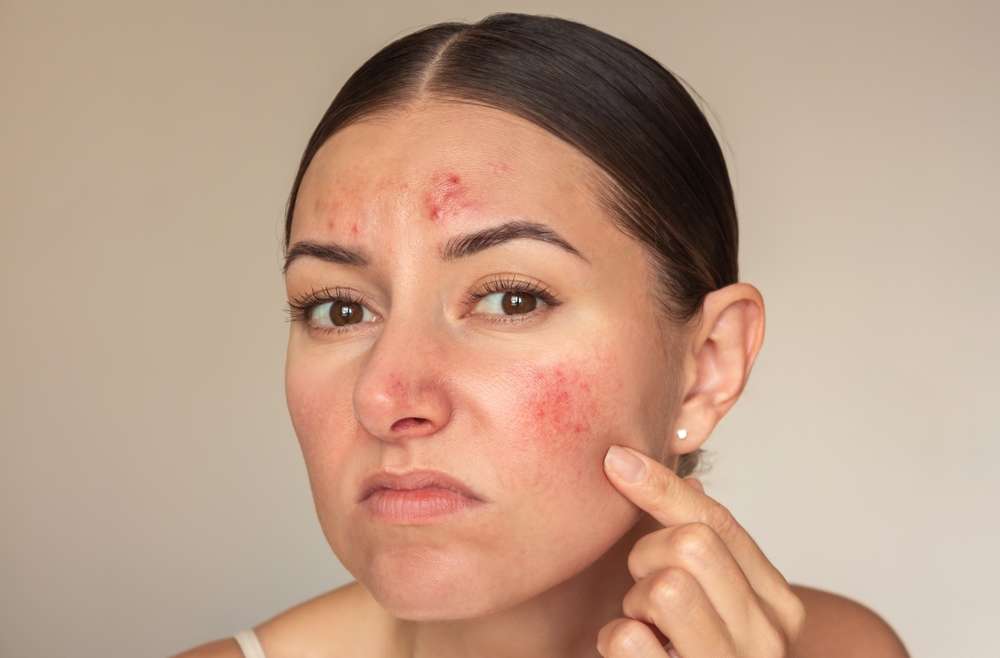
Facial skin reacts differently than skin anywhere else on the body, and when eczema develops there, it tends to be more visible, more sensitive, and often more frustrating to manage. Eczema on face in Arlington, VA, can look and behave differently from a flare anywhere else on the body, and treating it calls for extra care because facial skin is thinner and more reactive than skin elsewhere.
The good news is that facial eczema typically responds well to treatment once the right triggers and products are identified, even though facial skin requires a gentler approach than skin elsewhere on the body. Getting there starts with recognizing what makes facial skin different, and why so many over-the-counter remedies fall short in this area.
Understanding Eczema on Face in Arlington, VA
Facial eczema often appears as dry, red, or scaly patches on the cheeks, forehead, or around the eyes, and in some cases, it can also affect the eyelids themselves. The skin in these areas is thinner than skin elsewhere on the body, which makes it more reactive to irritation, more prone to visible redness, and slower to recover once a flare has started.
Atopic dermatitis is the most common cause, though contact dermatitis from skincare or makeup products can produce a very similar rash on the face. Because several conditions can mimic one another on facial skin, an accurate diagnosis often requires a closer look than a mirror alone can provide.
By the time you notice eczema on face in Arlington, VA, has become a recurring pattern, it is worth having a dermatologist confirm exactly what is causing it. A confirmed diagnosis makes every treatment decision that follows far more effective, rather than working through products by trial and error.
What Triggers Facial Eczema Flares
Skincare products, sunscreen, and makeup are common triggers on the face, particularly formulas containing fragrance, alcohol, or other ingredients that can disrupt the skin’s barrier. Switching to fragrance-free, minimal-ingredient products is often one of the simplest ways to reduce how often the face flares.
Weather plays a role as well, because cold, dry air and harsh wind can strip moisture from facial skin faster than skin covered by clothing. Environmental and lifestyle triggers such as stress, sweat, and frequent touching of the face can compound these effects.
Frequently touching or rubbing the face, whether out of habit or an attempt to relieve itching, can also prolong a flare and introduce additional irritation. Breaking this cycle is often as important as any product change, even though it tends to be the hardest habit to adjust, especially if itching persists.
Treating Eczema on the Face Safely
Facial skin requires gentler treatment than skin elsewhere on the body, and stronger topical steroids that work well on the arms or legs can cause thinning or discoloration if used on the face for too long. Lower-potency steroids, or non-steroid options such as topical calcineurin inhibitors, are better suited to this area.
A consistent, simplified skin care routine also supports treatment, because layering too many products can undo the benefit of any single one. Moisturizing with a gentle, fragrance-free formula immediately after cleansing helps the skin retain the moisture it needs to heal.
Because the face is more visible and more sensitive than most other areas of the body, professional guidance from a medical dermatology provider often produces faster, safer results than experimenting at home. A tailored plan accounts for your specific triggers, skin type, and the products already in your routine.
Find Relief for Eczema on Your Face
Marjan Yousefi, M.D. can help identify what is driving your facial eczema and build a treatment plan suited to sensitive skin.
Contact us online or call 703-255-5070 to schedule an evaluation and start treatment before your symptoms have a chance to spread further. New and existing patients can also book an appointment online