
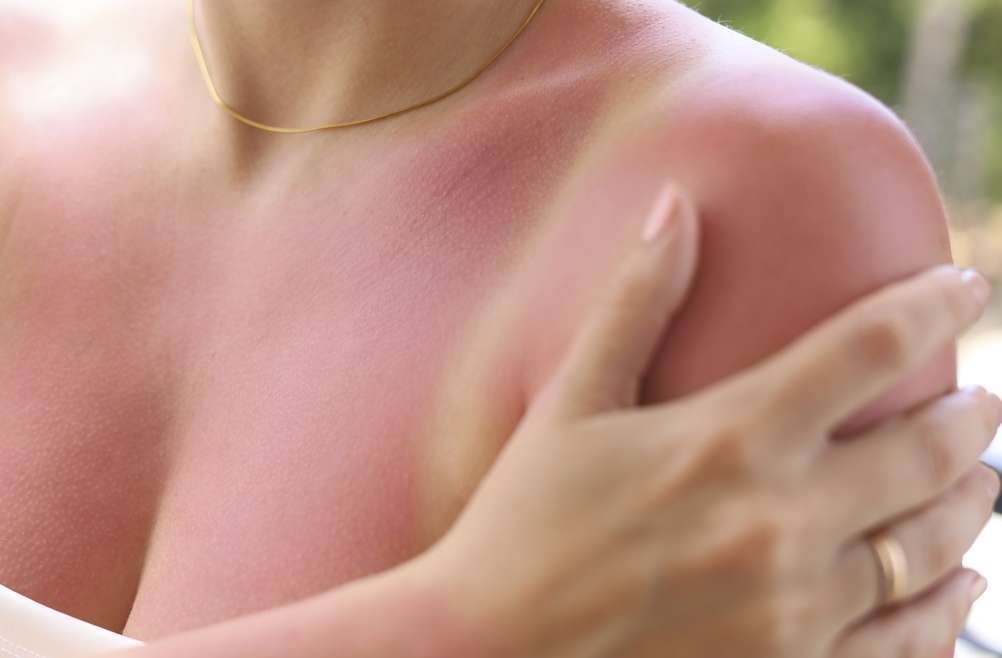
Some skin turns pink after twenty minutes outside, while other skin barely changes. That difference plays a role in your skin cancer risk.
Fair skin that burns easily raises your odds of developing cancer, and the reason comes down to biology.
Here’s what makes this skin type more vulnerable, and what you can do about it.
Does Fair Skin That Burns Easily Actually Raise Your Skin Cancer Risk?
The connection between fair skin and increased rates of skin cancer is well established. In fair-skinned populations, up to 95% of basal and squamous cell carcinomas and most melanomas trace back to ultraviolet exposure.
People with fair skin that burns easily are about twice as likely to develop skin cancer as people with darker skin tones.
Roughly one in five Americans will develop skin cancer during their lifetime, and fair skin remains one of the strongest predictors.
Doctors use this history, along with your mole count and prior sunburns, to set your screening schedule. This is why annual screenings often start earlier for people with this skin type than for the general population.
What Counts as Fair Skin That Burns Easily?
Dermatologists group skin by how it reacts to sun exposure, using a scale called Fitzpatrick skin type.
Fair skin that burns easily typically falls into the lightest categories on that scale. It burns before it tans, if it tans at all.
That reaction signals how much protection your skin cells have against UV damage.
Even a light tan or a single sunburn is a sign that UV light has already reached living skin cells.
Why Melanin Makes the Difference
Melanin is the pigment that gives skin its color, and it also absorbs and scatters UV radiation before it reaches deeper skin layers.
Fair skin that burns easily produces less melanin, which leaves skin cells with less of a natural shield.
Less shielding means UV rays reach the DNA inside skin cells more easily, raising the odds of mutations that lead to skin cancer.
Even the darkest natural tan only provides an SPF equivalent of about five, nowhere close to the SPF 30 dermatologists recommend for daily use. That’s one reason dermatologists ask about skin type before recommending a screening schedule.
Other Traits That Are Often Associated with Fair Skin
Fair skin is one of several traits that cluster together and compound cancer risk.
These features often include:
- Blond or red hair
- Blue or green eyes
- Freckles or a large number of moles
- A personal or family history of melanoma
Older age and a history of blistering sunburn, especially before age 20, both compound risk further.
How This Risk Shows Up on Your Skin
Fair skin that burns easily carries roughly double the skin cancer risk of darker skin tones.
Ultraviolet radiation is classified as a proven carcinogen, in the same category as tobacco smoke for its ability to damage DNA.
Solar keratosis, rough patches from years of sun exposure, shows up more often in this skin type and can signal early damage.
A full-body exam catches changes early, before a burn-prone spot turns into something more serious.
When Your Skin Type Deserves a Closer Look
Your dermatologist weighs skin type, family history, and sun exposure history together to gauge your risk.
Marjan Yousefi, M.D. is a Fellow of the American Academy of Dermatology. That training shapes how she screens fair skin that burns easily for early warning signs.
Call 703-255-5070 to speak with a member of our staff or book an appointment online to schedule a skin evaluation today.
Skin type does not change, but your habits around sun exposure and screening frequency can. Regular screening pays off for anyone whose skin burns before it tans, no matter how careful their sun habits are.