
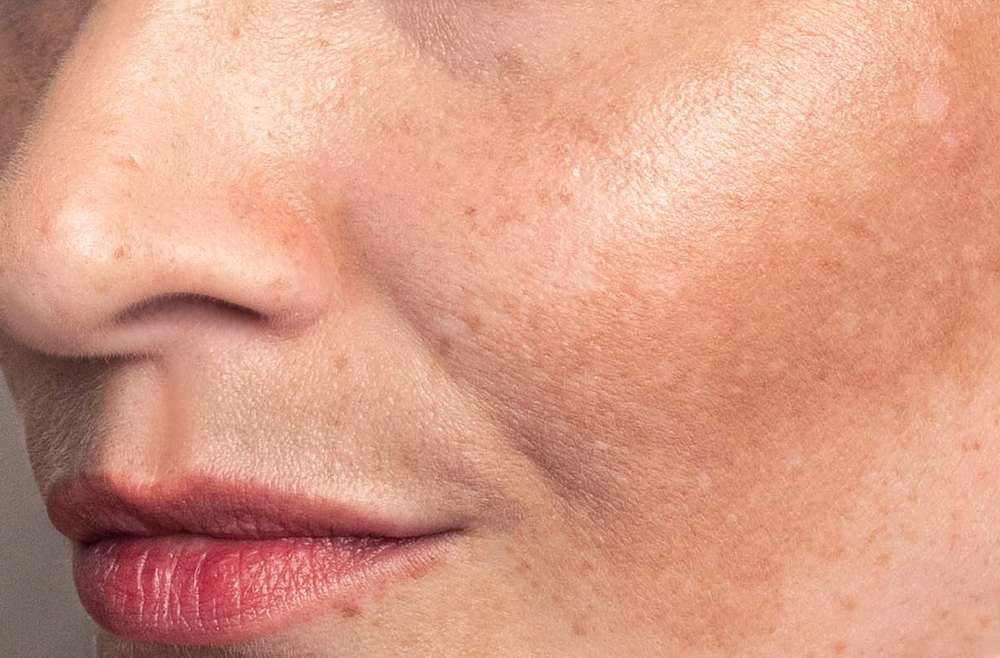
Melasma in Vienna, VA, is a common skin condition that causes flat brown or blue-gray discoloration, most often on the face.
Brown patches across the cheeks or upper lip can turn makeup into a daily requirement.
With medical dermatology care that targets what set them off, those patches can often lighten over time.
It responds to sunlight, hormones, and even heat, which helps explain why it can return after it fades.
A clear sense of what triggers melasma in Vienna, VA, and why it lingers, helps you build a lasting treatment plan.
How Everyday Light Keeps Melasma Active
When people ask what triggers melasma in Vienna, VA, sunlight tops the list, and beach days are only part of the story.
Ultraviolet rays, visible light, and heat can all prompt pigment cells to produce more color.
UV rays also pass through clouds and windows. A desk beside a sunny window can deepen patches even on days you barely step outside.
Tanning beds add to the risk, delivering UV exposure indoors.
Triggers That Have Nothing to Do with the Sun
Pregnancy is such a common trigger that melasma earned the nickname “mask of pregnancy.”
Birth control and hormone therapy that contain estrogen or progesterone can set it off as well.
About 90% of cases occur in women, usually between ages 20 and 40, though men can develop it too.
Family history plays a part, with about 60% of people reporting a relative who has the same patches. People with darker skin or skin that tans easily also face a higher risk.
Scented soaps and harsh skin care products can irritate the skin and make patches worse.
Why Melasma Is So Hard to Fully Clear
Melasma pigment can sit near the surface, deeper in the skin, or in both layers at once.
Surface pigment usually responds well to treatment, while deeper pigment tends to resist it.
Most people have the mixed type, which typically improves only partway. A dermatologist can gauge the depth with a Wood’s lamp, a handheld black light.
Triggers keep working after the patches fade.
Summer sun can bring pigment back, and some cases ease only after a pregnancy ends or a hormonal medication stops.
No treatment reliably removes deep pigment, so the goal often shifts to lighter, better-controlled patches.
The First Line of Melasma Treatment
Daily broad-spectrum sunscreen with iron oxides forms the base of every plan, along with a hat for time outdoors.
Prescription creams often come next. A combination of a lightening agent, a retinoid, and a mild steroid has been reported to improve most cases.
Superficial chemical peels can then lift pigment from the top layers of skin. Peels avoid heat, which makes them suitable for a wide range of skin tones.
Results build slowly, especially for patches that have been present for years.
Why Lasers for Melasma Belong in Expert Hands
Lasers can reach pigment that creams and peels miss, though the heat they produce can also provoke more pigment.
Some light treatments that fade ordinary sun spots, such as IPL, are generally avoided for melasma.
The Halo hybrid fractional laser can target deeper pigment when it is paired with topicals and strict sun protection.
Dermatology references describe lasers for melasma as requiring expert use, given the risk of relapse.
The training of the person running the laser carries as much weight as the device itself.
The Medical Training Behind Your Melasma Care
Dr. Marjan Yousefi is a board-certified dermatologist and a Fellow of the American Academy of Dermatology. She completed her dermatology residency at Geisinger Medical Center after earning her medical degree at George Washington University.
Her melanoma fellowship at the Washington Cancer Institute adds a useful safeguard, because some skin cancers can resemble melasma.
All of that training guides how she determines what triggers melasma in Vienna, VA, for each person.
Fewer Mornings Spent Covering Up Melasma in Vienna, VA, is Right Around the Corner
With steady care, those brown patches can fade enough that makeup feels optional again.
Call 703-255-5070 to schedule an evaluation at the Vienna office.
Whether you are new to the practice or returning, you can book online anytime or send the office a message with questions.
Meet Your Doctor: Marjan Yousefi, M.D., FAAD
Dr. Marjan Yousefi is a board-certified dermatologist and Fellow of the American Academy of Dermatology (FAAD) providing medical, surgical, and cosmetic dermatologic care across Northern Virginia, with modern offices in Arlington and Vienna.
Distinguished Education & Oncology Fellowship
- Medical Degree: The George Washington University Medical Center (with undergraduate studies at GWU and a focused study year at Oxford University).
- Dermatology Residency: Geisinger Medical Center.
- Specialized Fellowship: Completed an elite Melanoma Fellowship at the Washington Cancer Institute.
Comprehensive Skin Health & Aesthetic Precision
Dr. Yousefi combines rigorous clinical dermatology with non-surgical aesthetic rejuvenation, tailored for pediatric and adult patients:
- Medical & Surgical Dermatology: Expert skin cancer screenings, melanoma management, surgical excisions, psoriasis therapy, and advanced acne treatments.
- Cosmetic Injectables & Lasers: Subtle facial rejuvenation with Botox®, Dysport®, Juvéderm®, Restylane®, and Sculptra®, paired with Sciton Halo®, MicroLaserPeel, and BroadBand Light (BBL™) therapy.