
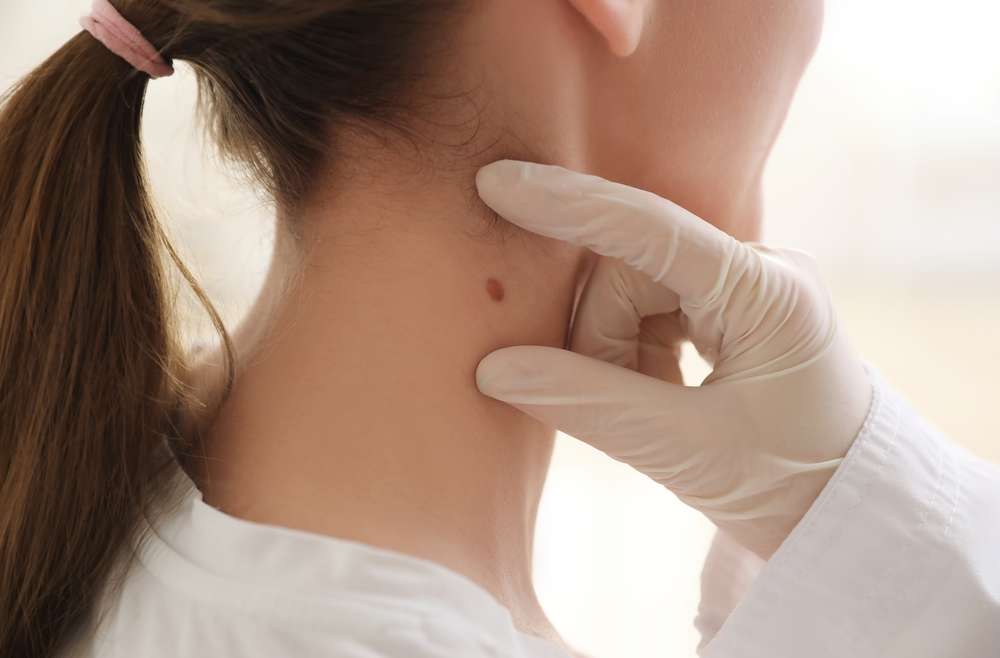
Annual skin cancer screenings in Vienna, VA, give a trained eye the chance to find what you might overlook.
The most common cancer in the U.S. can grow where you rarely look, like your scalp or back.
A full-body exam from a dermatologist covers those areas and can catch skin cancer early, when treatment tends to be simplest.
Many early cases look like an ordinary mole or a pimple that never heals, so they are easy to dismiss.
What Annual Skin Cancer Screenings in Vienna, VA, Look Like
Most skin cancers fall into two common types, basal cell and squamous cell carcinoma.
Both usually form on sun-exposed skin, such as the face, ears, neck, chest, and hands, though they can appear elsewhere.
Warning signs include scaly patches, red spots that linger, flesh-colored bumps, and open sores that do not heal.
Melanoma is less common but more dangerous, and it often looks like an unusual mole. Dermatologists check moles against five warning signs known as the ABCDEs:
- Asymmetry, where one half does not match the other
- Borders that look ragged or blurred
- Color that varies across the mole
- Diameter larger than a pencil eraser
- Evolution, or any change in size, shape, or color
One of these signs is reason enough for a closer look.
What Happens During a Full-Body Skin Exam
The exam begins with a few questions about your health history and any spots you have noticed.
Your dermatologist then checks your skin from scalp to soles.
Hard-to-see places get the same attention, such as behind the ears, between the toes, and under the nails.
A handheld magnifier called a dermatoscope helps reveal details in suspicious spots. High-resolution photos can record moles for comparison at future visits.
Most exams take about 10 to 20 minutes.
A spot that looks unusual may be biopsied, with a small sample sent to a lab for testing. Your dermatologist follows up with the results and any next steps.
Why Screening Helps Even with No Symptoms
For the earliest stage of melanoma, the five-year survival rate is about 98%.
Early detection also tends to bring simpler, less invasive treatment and the best chance of a cure.
A yearly visit builds a record of your skin over time. Each exam can be compared with the last, which makes slow changes easier to catch.
How Often You Should Be Screened
Anyone can develop skin cancer, regardless of skin type, and more younger adults are being diagnosed.
Risk climbs with a history of sunburns, heavy sun exposure, many moles, or a family history of skin cancer.
A yearly exam suits most people without those risk factors. Your dermatologist may suggest a visit every six months after a past skin cancer or with many atypical moles.
Self-exams between visits support early detection, too.
How to Prepare for Your Screening
A little preparation helps your dermatologist see every inch of skin.
Remove nail polish and makeup, and wear your hair loose so your scalp is easy to check.
Skip lotions and oils on exam day, and bring notes or phone photos of any spots that have changed.
A list of your medications and supplements is useful, too.
Melanoma Training Behind Every Screening
Annual skin cancer screenings in Vienna, VA, are led by Dr. Marjan Yousefi, a board-certified dermatologist and a Fellow of the American Academy of Dermatology.
She trained in dermatology at Geisinger Medical Center.
Dr. Yousefi’s melanoma fellowship at the Washington Cancer Institute adds focused training in spotting the moles most worth a biopsy.
When a biopsy confirms cancer, her team explains removal options, including Mohs surgery.
Schedule Annual Skin Cancer Screenings in Vienna, VA, With Dr. Yousefi
A spot on your back or scalp can go unnoticed without a second set of eyes.
Call 703-255-5070 to schedule annual skin cancer screenings in Vienna, VA.
Prefer to skip the phone? Book your exam online or send a quick message to the office with any questions you may have regarding skin cancer screenings.
Meet Your Skin Cancer Doctor: Marjan Yousefi, M.D., FAAD
Dr. Marjan Yousefi is a board-certified dermatologist and Fellow of the American Academy of Dermatology (FAAD) providing medical, surgical, and cosmetic dermatologic care across Northern Virginia, with modern offices in Arlington and Vienna.
Distinguished Education & Oncology Fellowship
- Medical Degree: The George Washington University Medical Center (with undergraduate studies at GWU and a focused study year at Oxford University).
- Dermatology Residency: Geisinger Medical Center.
- Specialized Fellowship: Completed an elite Melanoma Fellowship at the Washington Cancer Institute.
Comprehensive Skin Health & Aesthetic Precision
Dr. Yousefi combines rigorous clinical dermatology with non-surgical aesthetic rejuvenation, tailored for pediatric and adult patients:
- Medical & Surgical Dermatology: Expert skin cancer screenings, melanoma management, surgical excisions, psoriasis therapy, and advanced acne treatments.
- Cosmetic Injectables & Lasers: Subtle facial rejuvenation with Botox®, Dysport®, Juvéderm®, Restylane®, and Sculptra®, paired with Sciton Halo®, MicroLaserPeel, and BroadBand Light (BBL™) therapy.