
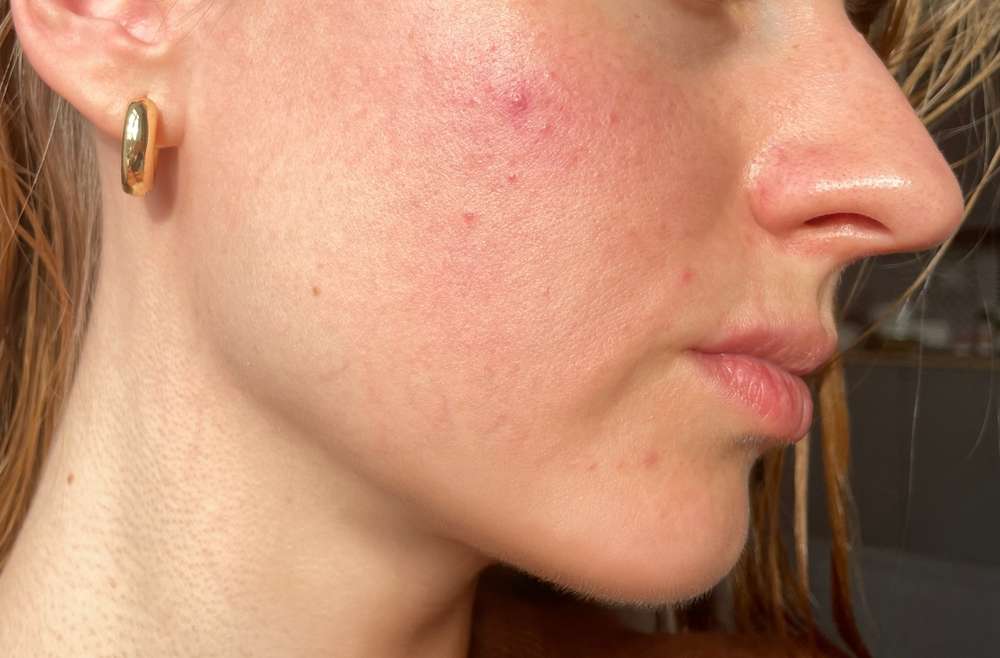
Every face turns red now and then, whether from a hot shower or an embarrassing moment.
Redness that keeps coming back, or never quite fades, can point to rosacea, a chronic skin condition that treatment can help control.
Rosacea most often begins between ages 30 and 60. Its earliest sign is often frequent flushing, which is easy to mistake for an ordinary blush.
A dermatologist can confirm whether the redness is rosacea in Vienna, VA, and help you find the triggers behind each flare.
When Redness Is Just Your Skin Reacting
Blushing from embarrassment, anger, or stress is a normal reaction. The pink glow after a hot shower is normal, too.
Ordinary flushing fades once your skin cools or the moment passes, and it leaves no bumps or visible vessels behind.
Redness with an obvious cause that fades quickly is probably not rosacea.
Signs That Point to Rosacea Instead
Rosacea brings a pattern of changes that ordinary redness does not:
- Flushing that happens more and more often
- Redness on the nose, cheeks, forehead, and chin that resembles a sunburn without any time in the sun
- Small red bumps, sometimes filled with pus, along with swelling
- Thin, visible blood vessels on the nose and cheeks
- Burning or stinging skin, or dry, irritated eyes
On darker skin, redness can be harder to see and may look dusky brown. Stinging, burning, and bumps often give clearer clues.
Rarely, untreated rosacea can thicken the skin on the nose or affect vision. Men tend to develop more severe cases, though women are diagnosed more often.
Common Triggers Behind a Flare-Up of Rosacea in Vienna, VA
The exact cause of rosacea is unknown, though genes, blood vessels that swell easily, and the immune system may all play a part.
Rosacea flares tend to follow a personal set of triggers. Weather is one, from summer heat and sun to cold, windy days.
Caffeine, alcohol, and hot or spicy foods can bring on flushing, too. Stress, intense exercise, and some skin care products or cosmetics can also set off a flare.
A simple log of what you ate, did, or felt before each flare can help reveal a pattern worth sharing with your dermatologist.
How to Tell the Difference With a Dermatologist’s Help
A diagnosis usually comes from a medical history and a close look at your skin.
Special tests are rarely needed.
Family history offers a helpful clue, as rosacea appears to run in families. Bring a list of your skin care products and any triggers you have noticed.
The exam also helps rule out lookalikes, such as hormonal or cystic acne, which can cause similar redness and bumps. Rosacea bumps lack the blackheads that often come with acne.
Self-diagnosis can lead you to treat the wrong condition and use products that irritate rosacea-prone skin.
Treatments That Calm Bumps and Lasting Redness
Treatment depends on which symptoms you have. Prescription creams and oral medications can calm bumps and breakouts, while light and laser options focus on persistent redness.
IPL sends bursts of broad-spectrum light into the skin, where it targets the blood inside visible vessels. Vascular lasers are often considered the most effective option for lasting redness and broken vessels.
Daily sunscreen supports every approach, as sun exposure is a known trigger.
Rosacea is chronic, so the goal is long-term control.
Prescriptions and Light Therapy in One Office
Dr. Marjan Yousefi is a board-certified dermatologist and a Fellow of the American Academy of Dermatology. Her practice offers medical and cosmetic care, so prescriptions and IPL can work side by side.
Treatment for rosacea in Vienna, VA, can then shift as your skin responds, from calming bumps to fading lingering redness.
Know Which Kind of Red You’re Seeing
A red face now and then is part of life, but redness that sticks around is worth having checked. Call 703-255-5070 to schedule an evaluation for rosacea in Vienna, VA.
You can book online anytime or send the office a message with questions.
Meet Your Rosacea Doctor in Vienna, VA: Marjan Yousefi, M.D., FAAD
Dr. Marjan Yousefi is a board-certified dermatologist and Fellow of the American Academy of Dermatology (FAAD) providing medical, surgical, and cosmetic dermatologic care across Northern Virginia, with modern offices in Arlington and Vienna.
Distinguished Education & Oncology Fellowship
- Medical Degree: The George Washington University Medical Center (with undergraduate studies at GWU and a focused study year at Oxford University).
- Dermatology Residency: Geisinger Medical Center.
- Specialized Fellowship: Completed an elite Melanoma Fellowship at the Washington Cancer Institute.
Comprehensive Skin Health & Aesthetic Precision
Dr. Yousefi combines rigorous clinical dermatology with non-surgical aesthetic rejuvenation, tailored for pediatric and adult patients:
- Medical & Surgical Dermatology: Expert skin cancer screenings, melanoma management, surgical excisions, psoriasis therapy, and advanced acne treatments.
- Cosmetic Injectables & Lasers: Subtle facial rejuvenation with Botox®, Dysport®, Juvéderm®, Restylane®, and Sculptra®, paired with Sciton Halo®, MicroLaserPeel, and BroadBand Light (BBL™) therapy.