
Getting through treatment for one skin cancer can feel like the hard part is over.
For most people treated for a first skin cancer, the research tells a different story.
The odds of skin cancer a second time run higher than most people expect, and that risk starts building almost immediately after the first diagnosis.
Here’s why your risk changes after a first diagnosis.
Are You More or Less Likely to Get Skin Cancer a Second Time? Here’s What the Research Shows
For most people, the odds of getting skin cancer a second time run higher, and the margin is not small.
A previous skin cancer raises your odds of a subsequent lesion by about 20% within the first year alone. That jump catches many people off guard, since most expect their risk to drop once treatment ends.
That risk applies broadly, covering another basal cell carcinoma or even a first melanoma diagnosis. It is not limited to a return of the exact cancer you already had.
Doctors call this field cancerization. The skin around a treated spot has usually absorbed nearly as much sun damage as the tumor itself, so a second cancer nearby isn’t a coincidence.
Why Your Odds Go Up
Skin that has already produced one cancer has usually absorbed years of cumulative UV damage. That damage rarely limits itself to a single, isolated patch of cells.
That’s part of why developing skin cancer a second time shows up in a new location as often as it returns to the original site.
Age plays a role too, since the DNA repair mechanisms that once cleared out damaged cells slow down as you get older.
Local Recurrence vs. a Brand-New Skin Cancer
Doctors describe a second round of skin cancer in a few different ways, and the distinction changes how closely your dermatologist watches a given area.
Local recurrence means the cancer returns at the exact site that was treated, sometimes years after the original scar has fully healed.
A new primary skin cancer develops somewhere else entirely, and that pattern turns out to be the more common one.
Both fall under the same umbrella, but they call for a slightly different follow-up, especially when it comes to how often you’re screened.
Why Treatment Choice Changes the Odds
Not every treatment carries the same odds of long-term success, which is part of why your dermatologist weighs several options before recommending one.
Mohs surgery cures about 99% of first-time basal cell carcinomas within five years, the highest rate among standard treatment options.
That cure rate drops slightly for cancers that have already returned once, settling closer to 94%, still well above standard excision or destruction methods.
The treatment you choose the first time shapes your odds of developing skin cancer a second time.
What Follow-Up Should Look Like
Doctors typically recommend a skin check every six to 12 months after the first skin cancer, with the interval tightening for higher-risk cases.
Certain spots deserve extra attention on top of that routine schedule. The lips and ears see higher rates of recurrence than other areas of the body.
A weakened immune system raises the odds further, making skin cancer a second time more likely regardless of which treatment you had the first time.
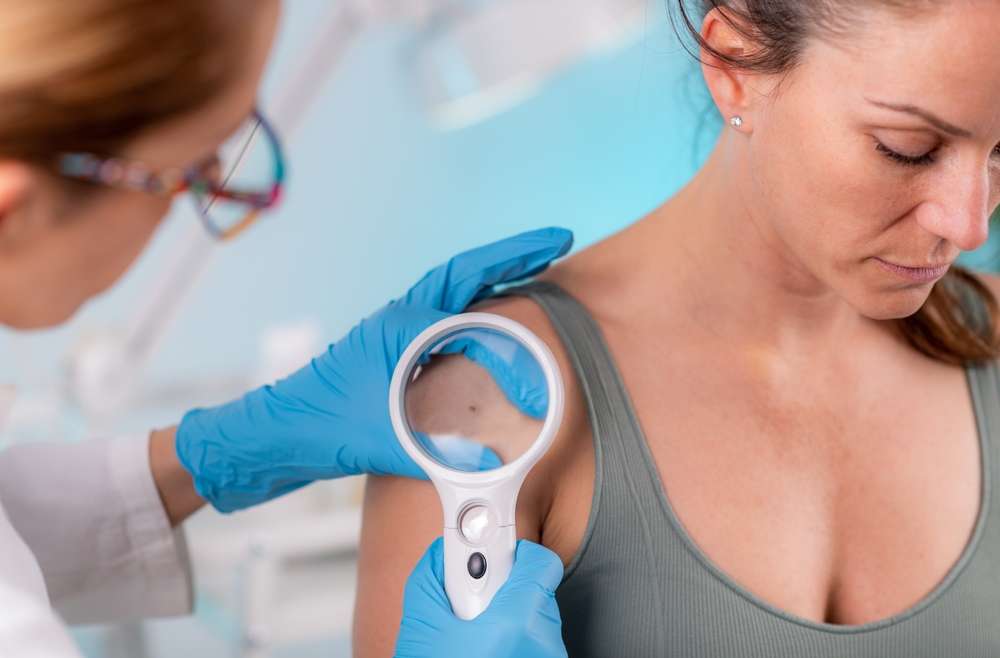
A full-body exam catches these changes long before they become obvious to you at home, which is exactly the point of routine screening.
Talk to Dr. Yousefi About Lowering Your Odds
Your history counts here more than you might expect. Tell your dermatologist which treatment you had, where, and how long ago.
Marjan Yousefi, M.D. is a board-certified dermatologist who builds each follow-up schedule around a person’s full cancer history.
Call 703-255-5070 or book online to schedule a skin evaluation today.
You lower your odds of skin cancer a second time by knowing your risk and showing up for the exams that catch it early.