
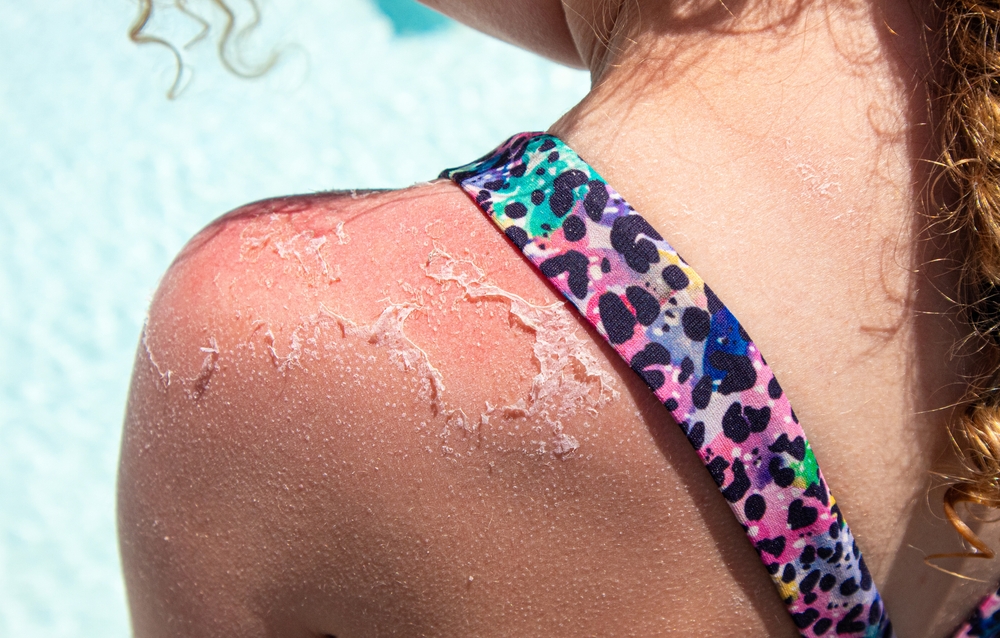
A sunburn from summer camp fades within a week, but the DNA of skin cells keeps a longer record.
That damage factors into skin cancer risk for years afterward.
Parents who are diligent about applying sunscreen are protecting their kids from more than a temporary burn. They’re lowering their child’s risk for developing skin cancer decades later.
Most people never connect a bad sunburn at age eight to a skin cancer screening at forty, but dermatologists see that link constantly. Prevention starts with understanding how the two connect.
The Research Behind the Sunburn-to-Cancer Timeline
Studies tracking sun exposure over decades reach the same conclusion. Childhood sunburns raise skin cancer risk well into adulthood, sometimes 20 or 30 years later.
Genetic studies support this observation. People who report sunburns before age 15 show meaningfully higher odds of developing melanoma and other skin cancers as adults.
Frequency plays a role here too. Kids who burn more often carry a higher risk even if their sun habits improve later in life.
That risk holds even for people who become more careful about sun exposure as adults.
The connection holds across genders and skin tones, though people with fair skin see the sharpest increase in skin cancer risk.
Why Children’s Skin Takes the Hit Harder
Kids aren’t just smaller versions of adults when it comes to sun exposure.
Their skin is thinner, and the pigment-producing cells that shield against UV damage are still developing.
That combination means childhood sunburns raise skin cancer risk more per exposure than a comparable adult sunburn would.
Cumulative damage compounds the problem, since kids spend far more hours outdoors than most adults do.
One Blistering Sunburn Can Leave a Lasting Mark
A severe, blistering sunburn is painful and harmful. UV radiation damages the DNA inside skin cells, and the body’s repair process occasionally makes mistakes while fixing it.
Those mistakes can accumulate over the years and eventually contribute to skin cancer, even from a single severe burn.
Doctors sometimes call this a life-changing sunburn, since childhood sunburns raise skin cancer risk even decades after the blister heals.
A single blistering sunburn during childhood can raise lifetime skin cancer risk on its own, without any other risk factors involved.
Sunscreen Habits That Protect Kids
Prevention beats treatment, and the habits that work are simpler than most parents expect. A dermatologist can help tailor the specifics to your child’s skin type.
A mineral sunscreen with SPF 50 or higher, applied 30 minutes before heading outside, covers most of the work.
Reapplication counts for more than the product itself. Sunscreen should be applied every two hours, or sooner after swimming or heavy sweating, and even water-resistant formulas don’t last indefinitely.
Hats, sun-protective clothing, and shade during peak UV hours cover what sunscreen alone misses.
Babies younger than six months should stay out of direct sun entirely rather than relying on sunscreen.
A little sunscreen resistance from a toddler is normal, and consistency counts more than a perfect application every single time.
When Kids Need a Dermatologist’s Eye
Routine skin checks aren’t standard for children the way they are for adults.
A family history of melanoma, certain genetic conditions, or an unusual birthmark changes that recommendation.
A changing mole, a sore that won’t heal, or a spot that looks different from the rest is worth a full-body exam.
A pediatrician is usually the first stop, and they can refer your child to a dermatologist when something looks concerning.
Childhood sunburns raise skin cancer risk decades down the road, but early detection means these cancers are highly treatable.
Sun Protection Today Is a Decades-Long Investment
The habits you build with your kids this summer shape their skin cancer risk for decades.
If your child has had a severe sunburn, a strong family history of melanoma, or a mole that’s changed, bring it up at their next visit.
Call 703-255-5070 to talk about sun protection or schedule a visit online.
Small, consistent habits now do more for your child’s long-term skin health than any single precaution ever could.