
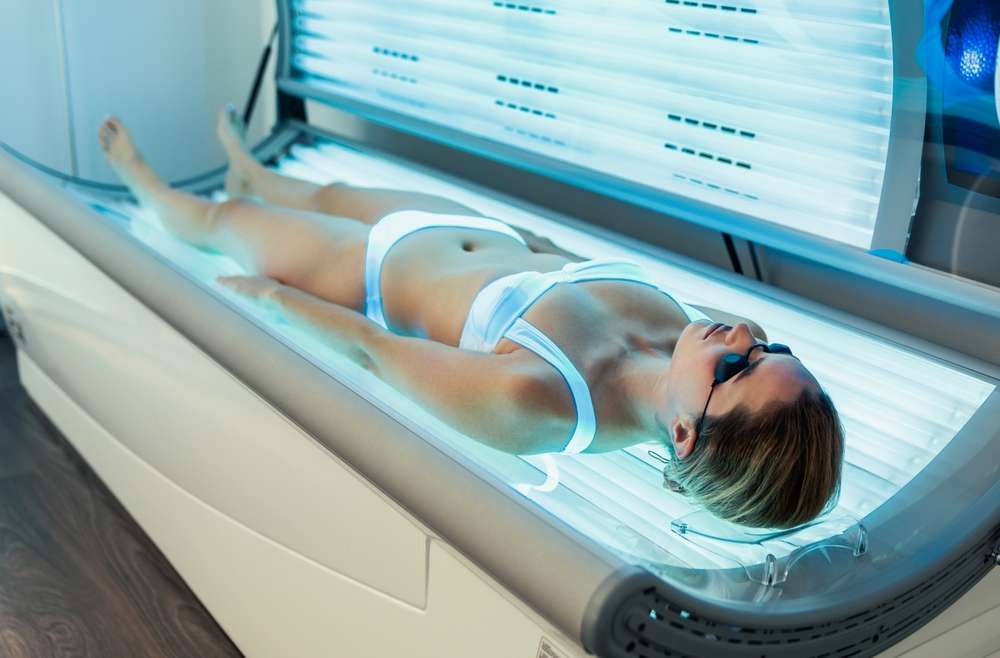
That tanning bed habit from your twenties might feel like a closed chapter, but the damage doesn’t close with it. Skin cancer linked to past tanning bed exposure can take years to develop.
So, the short answer is yes. A history of tanning bed use raises your risk, and how often you tanned counts more than how long ago you stopped.
Here’s what the research shows, and what it means for your skin now.
Does a History of Tanning Bed Use Actually Increase Your Skin Cancer Risk? Yes, and Here’s the Evidence
Roughly 7.8 million American adults still tan indoors, and many stopped years ago without realizing the risk lingers.
The connection between tanning bed use and skin cancer is well documented. People who tan before age 20 see their melanoma odds climb by 47%, with each additional session adding to that number.
Indoor tanning overall can more than double your skin cancer risk. It also raises your odds of squamous cell carcinoma by 58% and basal cell carcinoma by 24%.
Federal health authorities and the World Health Organization classify ultraviolet radiation from tanning beds as a known carcinogen. That’s the same category assigned to UV radiation from the sun.
Doctors weigh this history alongside your skin type and family background when they map out your screening schedule.
Why Indoor Tanning Beds Are More Dangerous Than the Sun
Tanning beds don’t deliver a gentler version of sunlight. Some devices emit UVA radiation up to four times stronger than the midday sun, with UVB levels nearly double.
That concentrated dose makes a single indoor session more damaging, minute for minute, than comparable time outdoors.
Each exposure adds to a chain of DNA changes inside your skin cells. Those changes can eventually push a single cell to divide out of control.
Evidence suggests tanning sessions routinely exceeded FDA-recommended exposure limits, sometimes by a wide margin.
There’s No Such Thing as a Safe Base Tan
Tanning salons often market a base tan as protection before a beach trip or a big event. That claim doesn’t hold up.
Even the darkest tan carries a sun protection factor (SPF) of about five, nowhere near enough to shield your skin from meaningful UV exposure.
A tan of any kind, whether from a bed or an afternoon outside, is visible proof that your skin has already sustained damage.
Melanin does offer some natural protection, but the amount is too small to prevent burns or meaningful UV damage.
A Single Session Still Adds to Your Risk
The risk of developing melanoma jumps 75% with any tanning bed use before age 35.
Your squamous cell carcinoma risk climbs too, often after just a few visits.
Tanning also triggers a release of endorphins, which is part of why an occasional habit can turn into a hard one to break.
Even a single trip to a tanning salon before a big event adds measurable risk that stays with your skin for good.
Who Faces the Steepest Risk from Past Tanning Bed Use?
Some people face higher risk of developing cancer than others based on genetics, age at first use, and how long the habit lasted.
Certain groups carry a heavier burden from indoor tanning:
- Women younger than 30, who are six times more likely to develop melanoma if they tanned indoors
- Anyone who started tanning before age 20, since risk climbs with each year of use
- People with fair skin, light eyes, or skin that burns or freckles easily
- Anyone with a personal or family history of skin cancer
A full-body exam can catch warning signs in any of these groups before a spot turns into something more serious.
Put Your Tanning History on the Record with Dr. Yousefi
Your dermatologist needs your full history, tanning bed use included, to judge your risk accurately.
Marjan Yousefi, M.D. completed a melanoma fellowship at the Washington Cancer Institute. That training shapes how closely she evaluates moles and spots tied to past UV exposure.
Call 703-255-5070 or schedule a skin evaluation today at the Arlington or Vienna office and talk through your tanning history together.
Ongoing skin checks carry the most value for anyone with a history of tanning bed use, no matter how long ago sessions stopped.